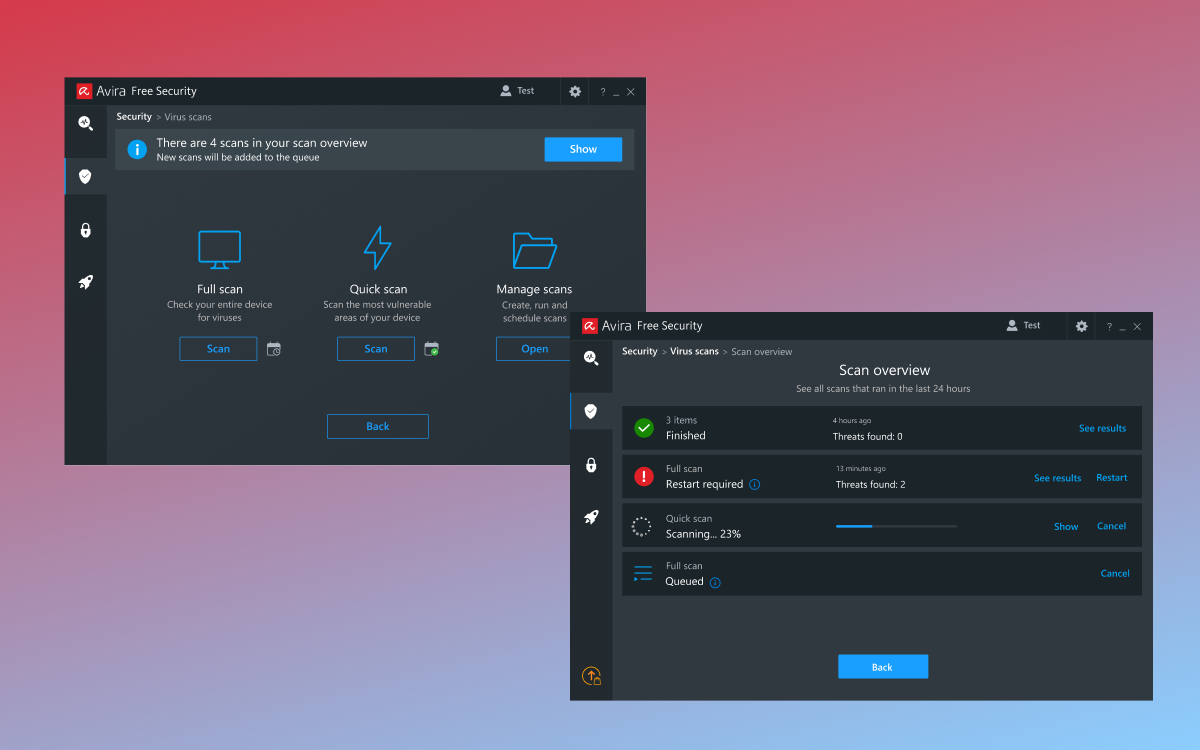
The existing product did not clearly communicate scan progress or support queueing multiple scans. This created confusion, frustration, and unnecessary cognitive effort for users.
Project process
Cybersecurity - Desktop App
A feature that improved the experience of running multiple antivirus scans.
Back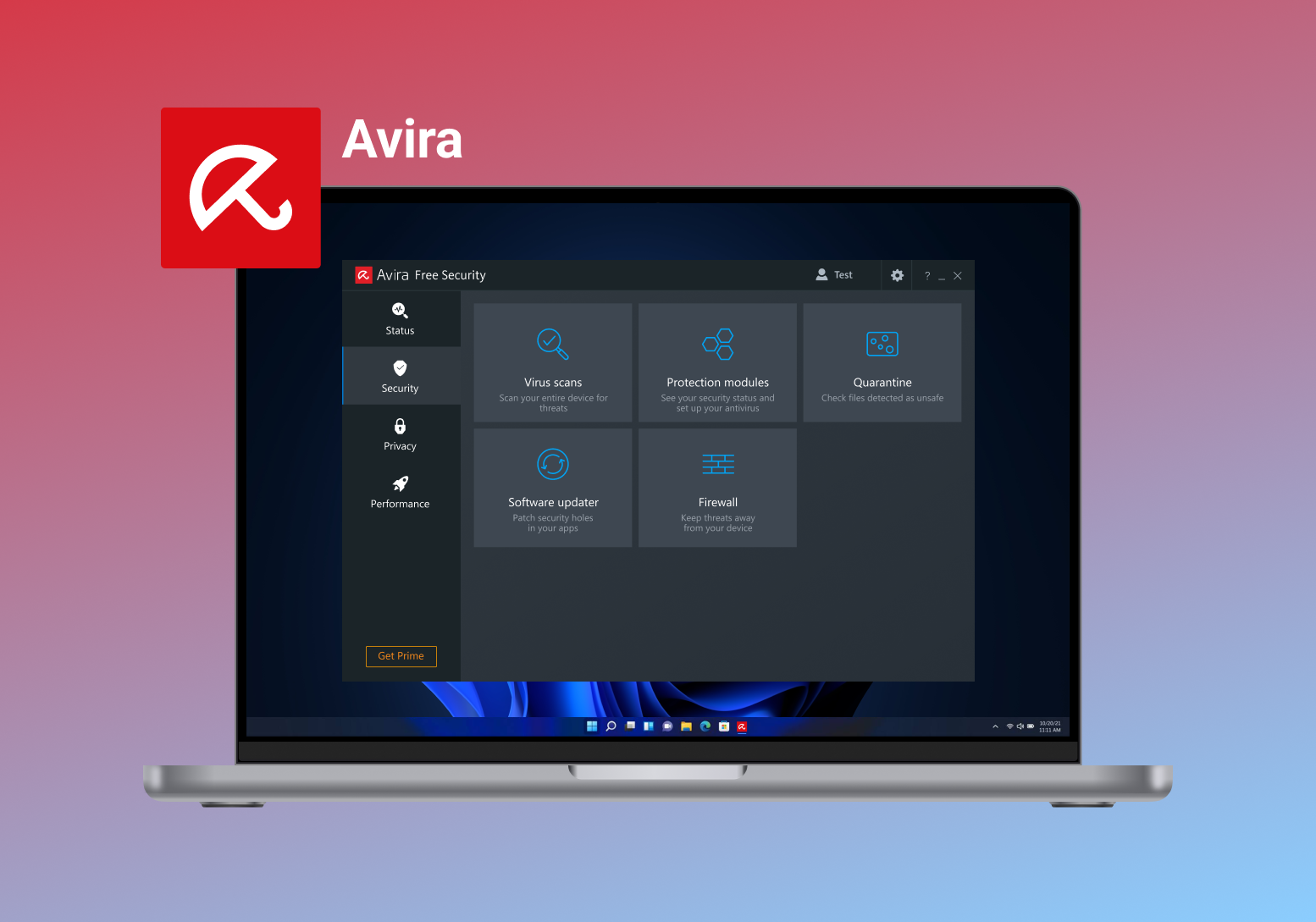
UX Researcher & Designer
Figma, Mixpanel, user testing software, Confluence, Jira
Plan
Identify usability concerns in the current solution, translate technical requirements into design opportunities, create a user-friendly and technically feasible improvement, and validate it through further research.
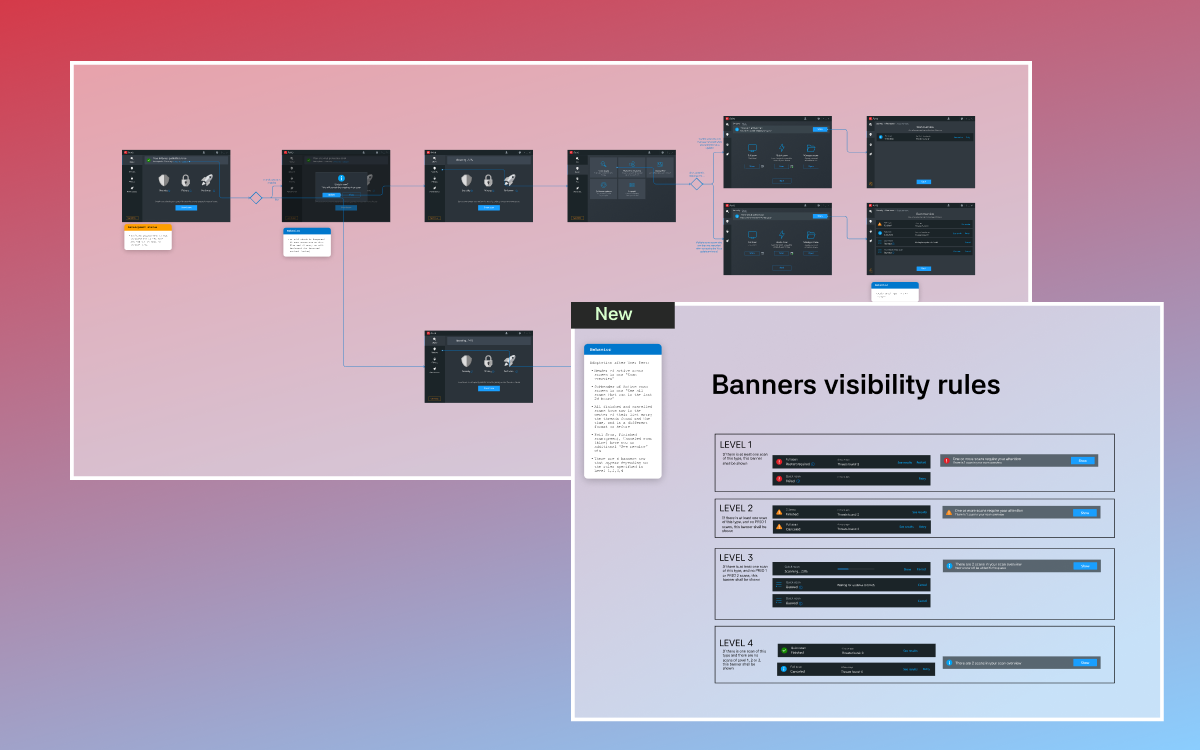
Design and research process
The feature was shaped through a user-centered process that combined direct user feedback, UX best practices, quantitative product data, stakeholder input, and technical constraints.
- Conducted usability research to understand expectations, needs, and areas of confusion.
- Used prototypes to test concepts before moving toward a final solution.
- Worked closely with stakeholders to keep the design both user-friendly and technically feasible.
Research discoveries
The validated solution helped users run multiple scans more easily and quickly. Success was evaluated with qualitative user research and quantitative product data, comparing behavior before and after release to understand usage, clicks, time spent, and engagement with the feature.
- Users understood the scan flow and progress more clearly.
- Testing showed no signs of cognitive overload.
- Mixpanel data helped measure whether the updated design increased feature usage and interaction inside the Avira app.
Outcome and lessons learned
The project increased product usage and business value while improving user satisfaction. A key lesson was the value of repeatedly asking why: the most important insight is often behind the first stated problem.